


He Inherited Freedom. Does He Believe It Is His?
At the risk of dating myself, I remember a very different mood among young people in post-communist Europe. I was a student in Prague in 1994, five years after the …
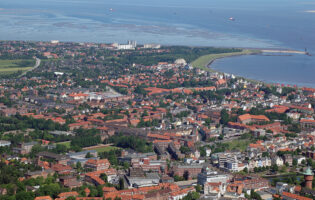
“Dear Occupants of Dohrmannstrasse 1”
A House, a Stream, and Two Telephones Looking back, Gary Sternberg could not believe he did it. He simply had been compelled to do so. On August 5, 2019, he …
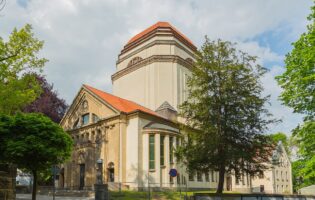
Looking for Germany’s Future in the Former East
A Week in Saxony On a warm Friday evening in late June, nearly 140 people gathered inside the former synagogue in Görlitz, Germany’s easternmost city. They had come from the …

Building LGBTQ+ Communities in Germany and the United States: Past, Present, and Future
A Three-Year AGI Project – Final Conference Summary The American-German Institute held a final conference in Washington, DC, for the three-year project, “Building LGBTQ+ Communities in Germany and the United …
Recent Authors
AGI provides knowledge, insights, and networks as tools to solve the challenges ahead.
Support Our Work
Heated Relations
The Past, Present, and Future of the LGBTQ+ Community in Germany and the United States For over a century, LGBTQ+ communities in Germany and the United States have fought for …
Episode 149: Forgotten LGBTQ+ Histories
The Stonewall Riots are known worldwide as a starting point for LGBTQ+ activism, and musicals like Cabaret have shared the story of the queer experience in Weimar Berlin. But the …

Here Today and Gone Tomorrow
Helga Silberberg and Shanghai’s Life Lesson Under the watchful eye of the policeman, the Meyer family packed their belongings into the wooden container.[1] This intrusion into the Meyer residence was …

Far Beyond a Name
Peter Arthur Gray’s Search for Identity and Trust Peter Arthur Gray has gone by many names over the years. When asked to identify himself at the beginning of an interview …

Toy Maker 2: Journeys
On June 20, 2018, the article “The Story of Bert Reiner, the Toy Maker, or: An Appreciation for the Individual Experiences of Former Shanghai Jewish Refugees” was published by the …

Forty Years After Forty Years After
Reflections on the Eightieth Anniversary of the End of World War II The 8 of May, 2025, is the eightieth anniversary of the end of World War II in Europe. …
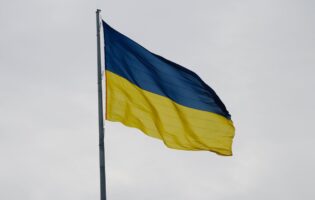
“Never again Ignore”
Why supporting Ukraine is a strategic necessity, not simply a moral obligation Support for Ukraine is a strategic necessity. However, in Germany, support for the beleaguered country is mainly portrayed …
Episode 123: An Expanding German Memory Culture
For decades, memory culture in Germany has largely focused on coming to terms with and memorializing the Holocaust. In recent years, however, memory discourses have expanded to include, among others, …

Some Small-Town Reflections on Catechism 2.0
When it came to German memory, the language of Dirk Moses’s initial contribution to what subsequently became the so-called Catechism debate was replete with references to a priestly cast, priestly …