
Publications
AGI publications offer deeper insights into various aspects of the German-American relationship.
Archived Publications
Transatlantic Perspectives and Web Essays | Working Papers | Previous Publication Series

Far-Right Violence and World Community
An Evolving Threat in a Changing World What the life and work of German-American Christian ethicist Reinhold Niebuhr (1892-1971) tells us about an old problem in a new context. Far-right …

Climate Policies in Germany and the United States
Lobbying through Networks? At the UN Climate Change Conference (COP 28) at the end of November 2023, big questions arose about how the states performed after the Paris Agreement (COP …
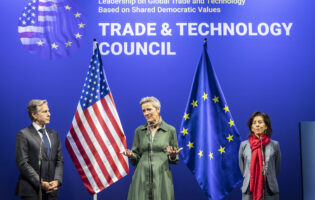
Transatlantic Cooperation vs. Tech Nationalism
Values and Standards in the New Systemic Competition It is widely accepted that the ability to set technological standards is a prerequisite for an economy’s success on the world markets; …

The German-Israeli Relationship: A Chronicle of Four Decades, 1983-2023
On the occasion of the 40th anniversary of AGI, the Society, Culture, and Politics program is pleased to present Dr. Lily Gardner Feldman’s policy brief devoted to understanding four decades …

A Limping Coalition of the Willing
Why is Transatlantic Cooperation on Clean Steel Lagging Behind? The 2020s have arrived as a decade of multiple crises. Beyond their devastating impact, however, these crises have also changed our …

Translating Politics into Technocracy in the European Banking Union
The failures of two Belgian-based banks, Fortis and Dexia, have cast a long shadow over European financial regulation. Once viewed as a model of regulatory cooperation, the Fortis collapse in …

New Strategies of Transnational European-U.S. Right-Wing Extremist Combat Sports Networks
This article assesses the main strategies, networks, and threat potentials affiliated with the activities of two current key right-wing extremist (RWE)[1] leaders who first met in 2018 at a combat …

Local Governance of Religious Diversity in Hamburg and Washington, DC
A Transatlantic Perspective Germany is an increasingly heterogeneous society. This has become obvious by the Bundestag elections in September 2021. For the first time in the history of the Federal …
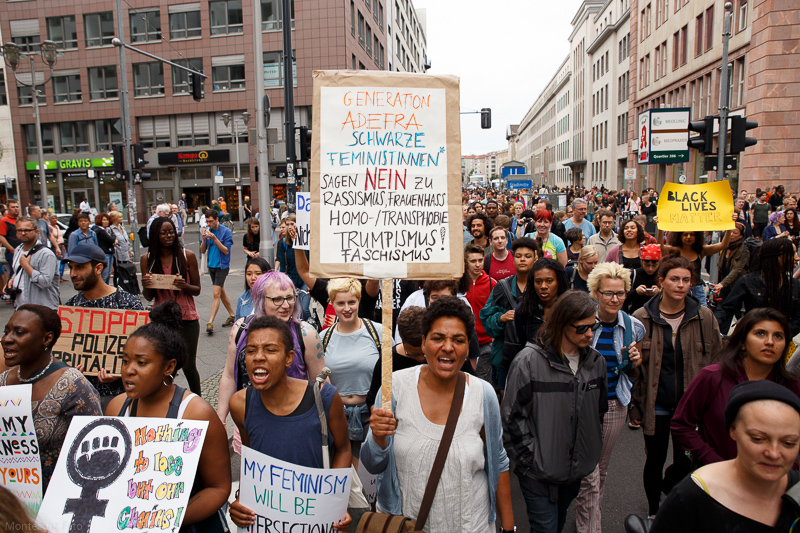
Comparing Racisms in Post-Migrant Societies
Similarities and Differences in Approaching Racism in Germany and the United States Rising Relevance of Racism in Germany A series of racist murders has brought the issue of racism into …

Learning from the Pandemic
Transatlantic Solutions to Global Crises The AGI project “Transatlantic Cooperation in Times of Global Crises – Opportunity and Imperative for Cooperation” took an expanded look at how Germany and the …

Underestimated Threat to Pluralist Democracy
Anti-Feminism in Parliamentary Speeches made by Female MPs of the Populist Radical Right in Germany and the United States Voters in many European countries are turning away from mainstream parties, …

Misperceptions and Distortions
How China, Germany, the EU, and the United States View Each Other in Times of War and Turmoil Dealing with a dynamic and increasingly assertive China is one of the …